
11 Sep What Do You Want Your Pediatric OT Career to Feel Like?

You became a pediatric occupational therapist for a reason.
Maybe it was the creativity. The relationships you get to build with children and families. The little wins that don’t always look so little when you know how hard a child worked to get there.
Or maybe it was something even simpler.
You wanted to help kids live, learn, play, and participate more fully in their world.
That’s probably still the part you love.
But loving pediatric OT doesn’t mean you have to love every way there is to practice it.
Maybe you’ve started wondering what else is out there. Maybe you want more support, more autonomy, room to grow, or simply a workday that feels a little more like the OT you thought you’d be.
What if you don’t need a different career?
What if you just need a different way to be a pediatric OT?
You’ve Grown. Has Your Career Grown With You?
Think about the pediatric OT you were when you first started.
Now think about the therapist you are today.

You’ve learned things no textbook could have taught you. You’ve figured out how to connect with the child who
didn’t want anything to do with therapy. You’ve changed the plan halfway through a session because you realized something else was needed. You’ve celebrated the wins that nobody else would quite understand.
And somewhere along the way, you probably realized that helping a child isn’t really about one skill, one session, or one hour of therapy.
It’s about the whole child.
Their strengths. Their interests. Their challenges. Their family. Their education. Their co-curriculars. Their routines. Their relationships. The environments they move through every day.
You’ve grown into the kind of therapist who sees more.
Has your career made room for that growth?
What Does a Good Pediatric OT Job Feel Like?
Of course, there are practical things to consider when looking at pediatric OT jobs.
Salary matters. Benefits matter. Hours and caseloads matter.
According to the latest available U.S. Bureau of Labor Statistics data, the national median hourly wage for occupational therapists is $48.24.
But that’s a national benchmark across occupational therapy. It isn’t a number that tells every pediatric OT what they should be making.
And that’s an important distinction.
So, Am I Being Paid Fairly?
If you’ve spent any time on social media lately, you’ve probably seen conversations about OT pay.
Those conversations can be helpful. We’re glad OTs are talking about compensation and advocating for themselves.
But a salary or hourly rate shared online doesn’t always tell you the whole story.

An OT earning a higher hourly rate as an independent contractor may be responsible for expenses and benefits that an employee isn’t- and IC is most often not even the legal classification for an OT! A PRN rate may look very different from a full-time employee’s rate. Compensation in San Francisco won’t necessarily look like compensation in another part of the country.
Even two pediatric OT jobs in the same city can be structured very differently.
So instead of asking only:
“What are other OTs making?”
Try asking:
“What doesmy entire compensation picture look like?”
Look at the things surrounding the number.
Are you paid for documentation, cancellations evaluations, planning, meetings, and collaboration? How is travel handled? How anre evaluations paid out? Are benefits included? Is there paid time off? Continuing education support? Mentorship? What are the productivity expectations? How many hours are you actually working when you count everything required to do your job well?
And as your experience, expertise, and responsibilities grow, is there a path for your compensation to grow with you?
Social media can start a conversation. It shouldn’t be the only thing you use to decide what your work is worth.
Look at reliable wage data. Understand your local market. Compare similar employment models. Ask questions about the entire role.

Then think about something numbers can’t answer:
Do I feel valued here?
Do I feel supported?
Do I have room to be creative?
Am I still learning?
Am I trusted to use my clinical judgment?
Do I have time to collaborate with the people who know the child best?
Can I imagine myself being happy here a few years from now?
You are allowed to want meaningful work and fair compensation.
We think both belong in the conversation.
Maybe Your Best Work Happens Out in the World
This is where pediatric OT gets really interesting.
A child doesn’t experience life one hour at a time in a therapy room.
They’re trying to get dressed before school. Sit with their classmates. Write, cut, climb, eat, regulate, make friends, join the game, tolerate the noisy cafeteria, get through homework, and navigate a thousand little moments that make up childhood.
What happens when we get to meet them there?

Community-based pediatric occupational therapy allows us to see children in their natural environments, including homes, schools, and local parks.
Suddenly, you’re not just hearing that the playground is hard.
You’re on the playground.
You can see the environment. You can see what’s working. You can notice the child’s strengths. You can collaborate with the teacher or parent who is there every day.
And sometimes, something that didn’t quite make sense before starts to click.
That’s one of the things we love most about the way we practice at World of OT.
We aren’t just supporting a child.
We’re supporting their whole world.
Parents, teachers, caregivers, and other members of the child’s team all bring something important to the table. We get to listen, collaborate, coach, problem-solve, and create practical strategies together.
Because progress is so much more meaningful when it carries into everyday life.
What Kind of Pediatric OT Do You Want to Be?

Maybe that’s the question worth asking.
Not what title do you want next.
Not where should you be in five years.
What kind of therapist do you want to be when you’re with a child?
Maybe you want to follow their interests and let play lead the way.
Maybe you want to spend more time building relationships with families.
Maybe you want to collaborate more closely with teachers.
Maybe you want the freedom to look beyond what’s “wrong” and notice the strengths, interests, environments, and relationships that can help a child thrive.
Maybe you want to feel like a partner in progress, not simply a provider checking off another session.
And maybe you want to work alongside other pediatric OTs who see children that way, too.
A Little Something to Sit With
The next time you have a really good day as a pediatric OT, pay attention to it.
What made it good?
Was it the child who finally trusted you enough to try?
The parent who told you something was getting easier at home?
The teacher who tried one of your strategies and couldn’t wait to tell you it worked?
Was it getting outside? Playing? Problem-solving? Collaborating?
Was it simply feeling like you had enough space to be the therapist you know how to be?
That’s information.
You spend so much of your career noticing what helps children thrive.
It’s okay to start noticing what helps you thrive, too.

We’re Growing, Too
At World of OT, our approach has always started with looking at the whole child and their whole world.
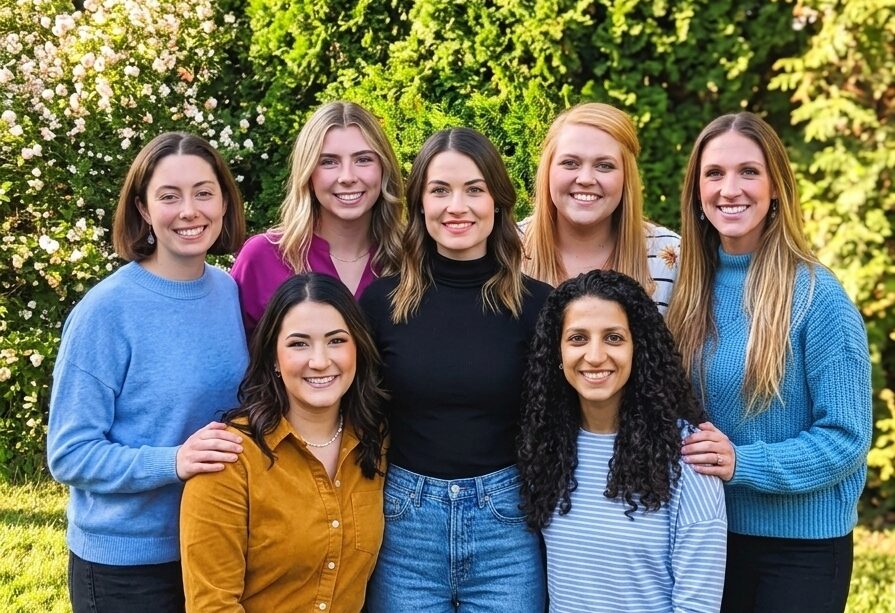
We’re a holistic, community-based pediatric occupational therapy practice serving children and families throughout San Francisco. Our therapists work in natural environments, partner with families and educational teams, follow children’s strengths and interests, and use child-led, play-based approaches to make therapy meaningful in everyday life.
And right now, we’re growing our team.
If you’ve been searching for a pediatric occupational therapy job in San Francisco, exploring community-based pediatric OT, or simply wondering if there’s another way to practice, we’d love for you to get to know World of OT.
But whether you’re looking for a new pediatric OT job today or you’re perfectly happy where you are, we hope you’ll take one question with you:
What helps me thrive as a pediatric OT?
Because when the people supporting children are growing, learning, connected, and supported themselves, something pretty special can happen.
And we think our kids deserve that.

No Comments